I’m Lia Rees – Newham Radical History.
Listening to some of these talks today, I kept thinking: we’ve been here before.
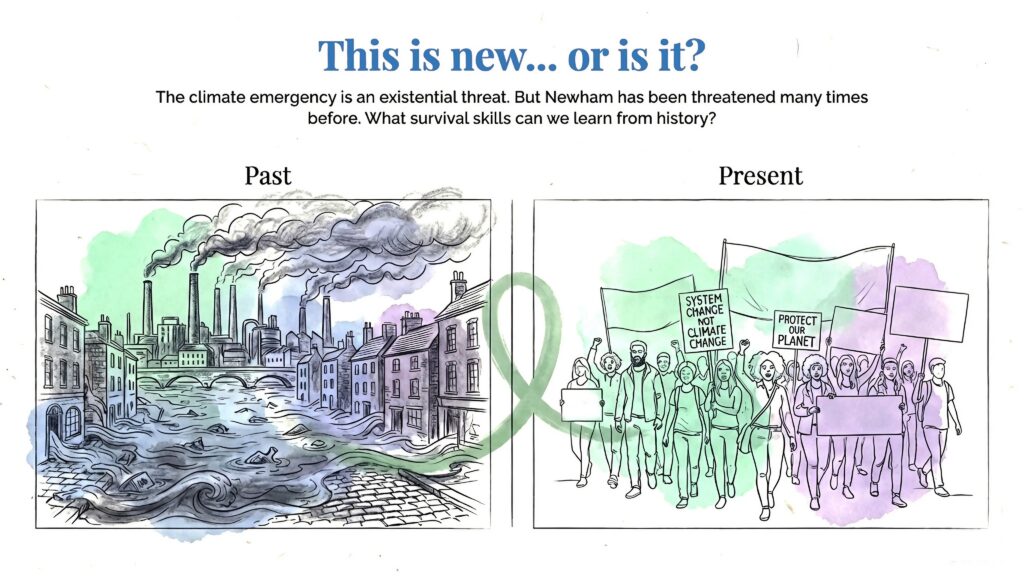
This borough has a turbulent past, and our people many times have had our backs against the wall. The climate emergency right now is another existential threat, so it makes sense to look to local history for insights and strategy.
Sometimes the words “climate emergency” are hard for new people to take on board, because it’s an *ongoing* emergency. And that feels like a bit of a paradox.
But protecting and sustaining the community is something anyone can understand. We’ve built structures and cultures over time to make that possible. And some of those structures are exactly what we need in the climate emergency.
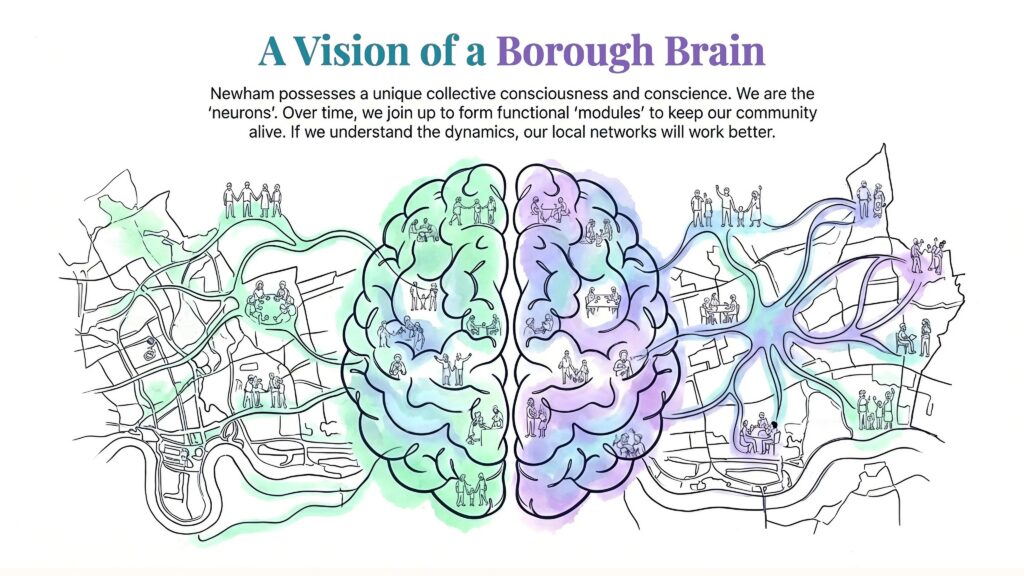
I’ll be linking this to Gavin Sealey’s keynote talk – the vision of a Borough Brain.
The “Borough Brain” is our analogy for Newham’s collective consciousness — and conscience. Those words are similar for a reason.
The concept came from my friend Gavin (hello!), but it resonates with me, because there are so many parallels with local history and how this borough naturally operates. We can see ourselves as “neurons”, and over time we’ve joined up into “modules” to carry out the various functions of a community brain.
So how did we get here, what was the push? Two centuries of struggle, and I’ve got to cover it in two minutes (!).
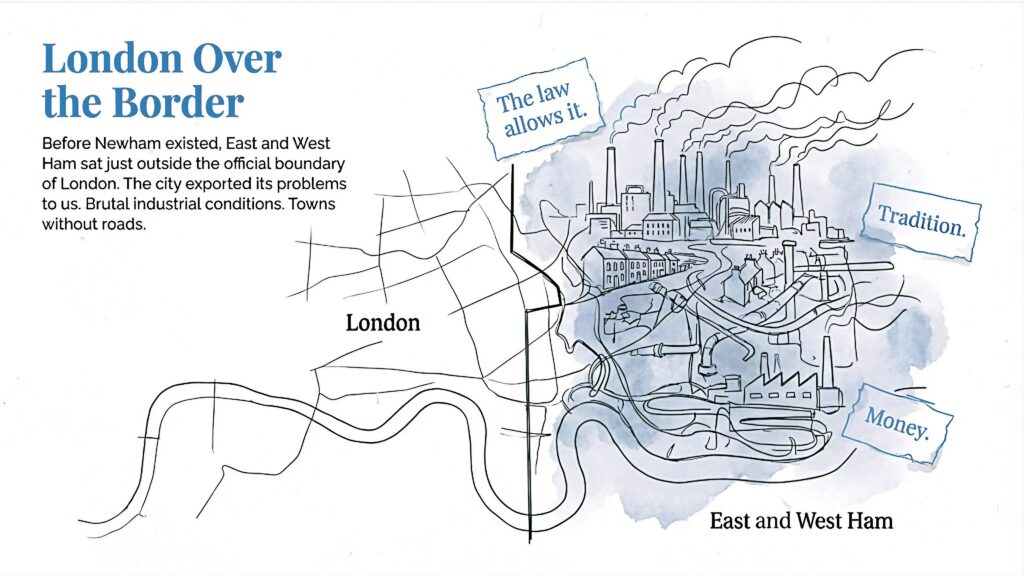
Before “Newham”, there was East Ham and West Ham, just outside the official boundary of London. Which wasn’t a good place to be. The city at the time was exporting its problems to “London over the border” – that was us, right here. There were brutal, dangerous work conditions in the new industries, towns built without proper roads, the south of the borough regularly flooded by a poisonously polluted Thames.
And no-one seemed to care. If they did, they shrugged their shoulders and said things like: “The law allows it.” Or “Tradition”. Or “Money”.
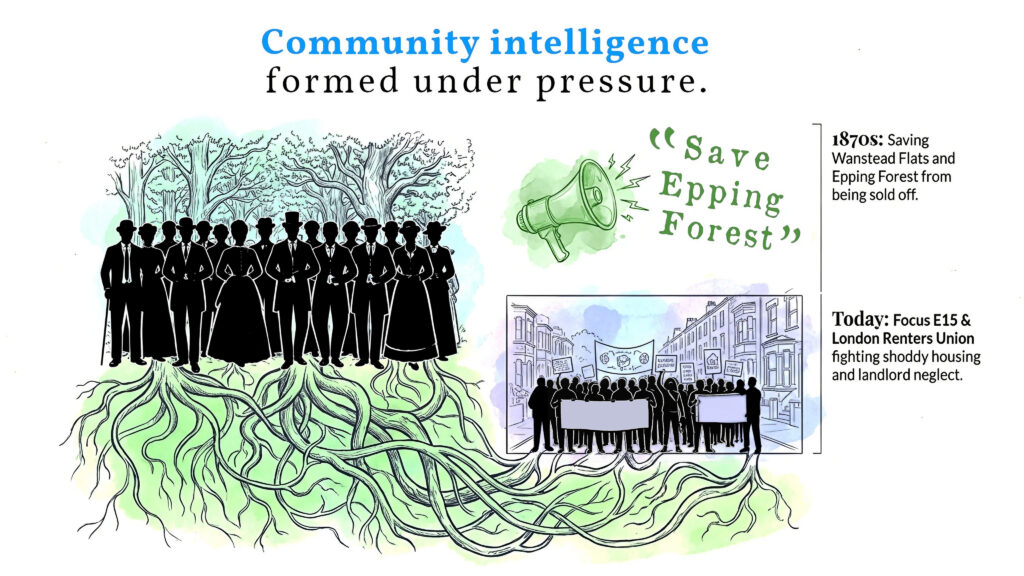
Survival intelligence, that’s how it started. The first sparks of awareness in a developing “Borough Brain”. People here had to defend their homes, their land, sometimes their lives. So Newham learned self-organisation, practical skills, problem-solving at grassroots level.
In the 1870s, the community saved Wanstead Flats and Epping Forest from being carved up and sold off by profiteering landowners. That campaign has been called the birth of the modern environmental movement.
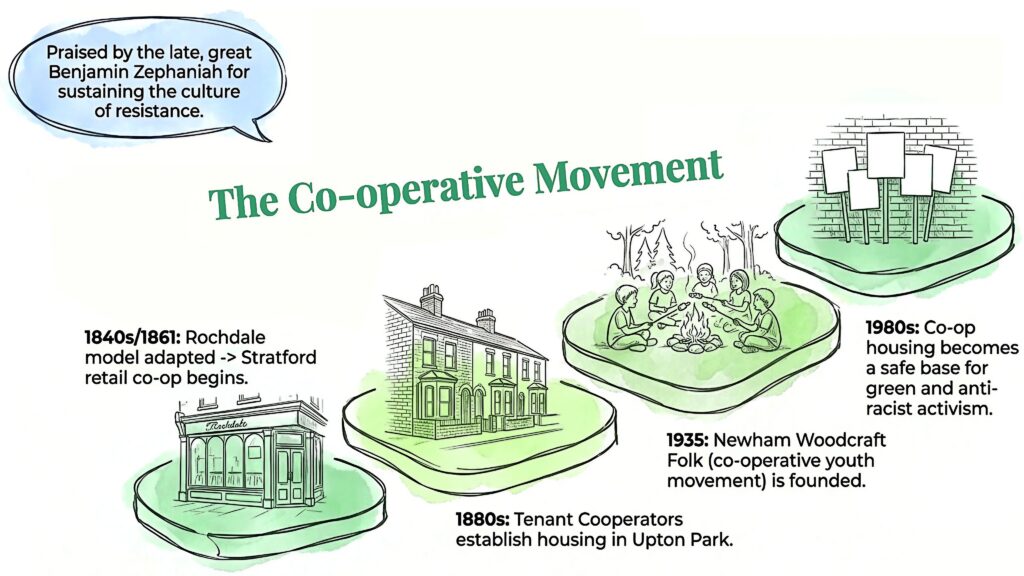
Meanwhile, *other* landlords were building shoddy housing, bribing the inspectors to look the other way, and charging rip-off rents. The situation inspired the first housing co-ops, such as Tenant Cooperators in Upton Park. The housing battle continues – carried on today by groups like Focus E15 and London Renters Union.
So community intelligence in Newham evolved under extreme pressure — and it became seriously sophisticated. Co-ops, volunteer groups, trade unions, mutual aid networks — these were just some of the building blocks.
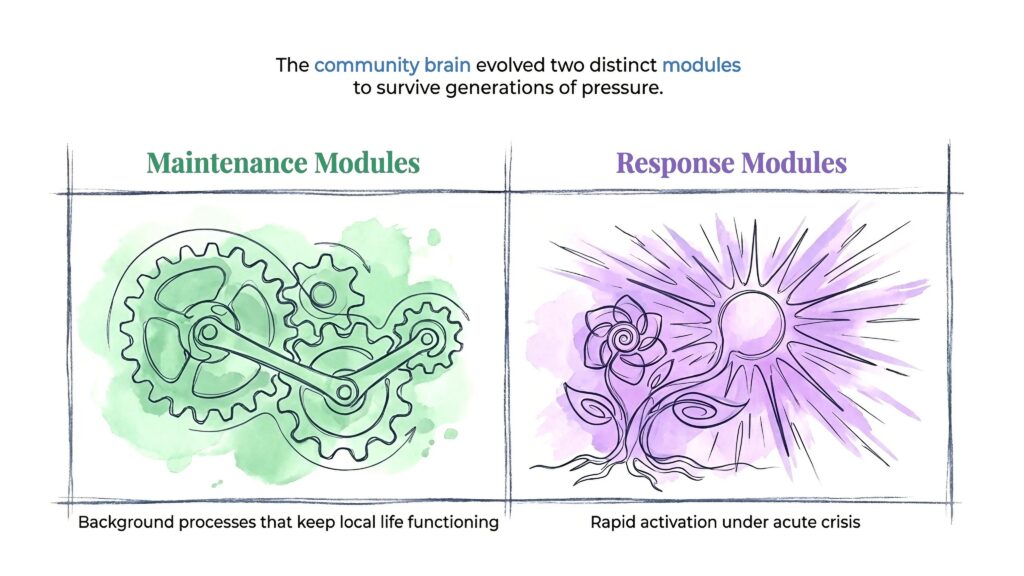
The Borough Brain built what I call “maintenance modules”. They deal in persistence work – the “safe/boring” background processes to keep local life functioning. Quiet, ongoing activity to keep the community ticking over.
Then we had what I call response modules – they swing into action in a crisis. Campaign groups, activists, so-called “troublemakers” – our collective conscience.
And there are hybrid modules doing both types of work, like charities and trade unions. The mutual aid groups that flourished in Newham during Covid are a recent example. Co-ops are another.
2025 was International Year of Cooperatives, and the United Nations has just decided to repeat that on a ten-yearly basis. That’s how important co-ops are around the globe.
The idea of a cooperative is: a collectively-owned, democratic and participative project. They operate in different spheres (such as retail, work and housing), and adopt various legal structures, but the culture is the key to it all. Everyone gets a say in a co-op.
The retail co-op model started in Rochdale, Lancashire, then Stratford picked it up in 1861 and ran with it, eventually merging into the London Co-operative Society which became the Co-op supermarket.
Co-ops are built for community persistence, but they can also support resistance. Newham’s co-operative housing and culture in the 1980s was a safe base for anti-racist and green activism: the late, great Benjamin Zephaniah went out of his way to praise it.
I think the real start of local resistance was the Quakers (Society of Friends). They were influential in East Ham since the seventeenth century. They campaigned against slavery, the death penalty and the Victorian prison system, and faced fines and imprisonment themselves. Even today, they’re active in the peace movement.
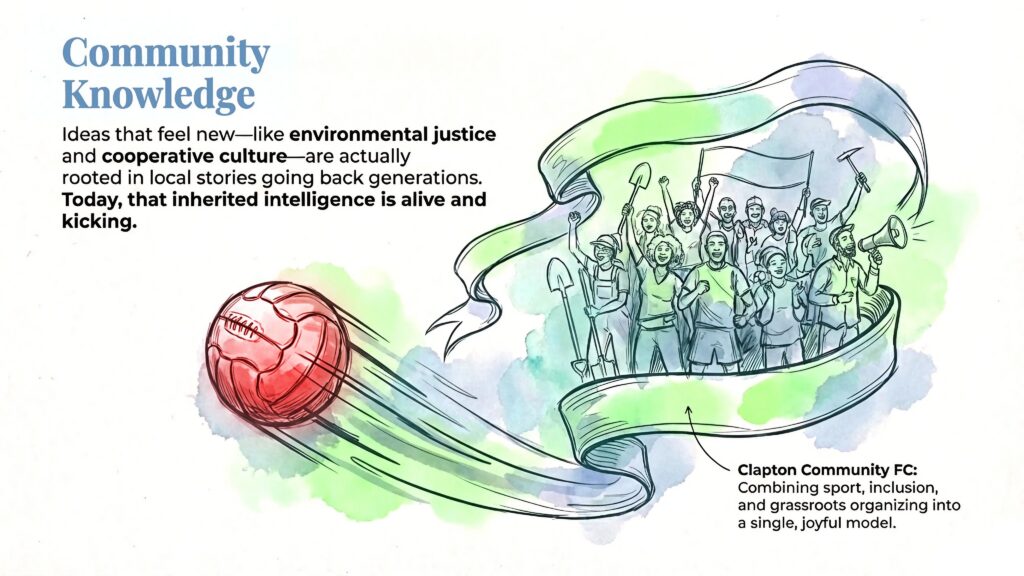
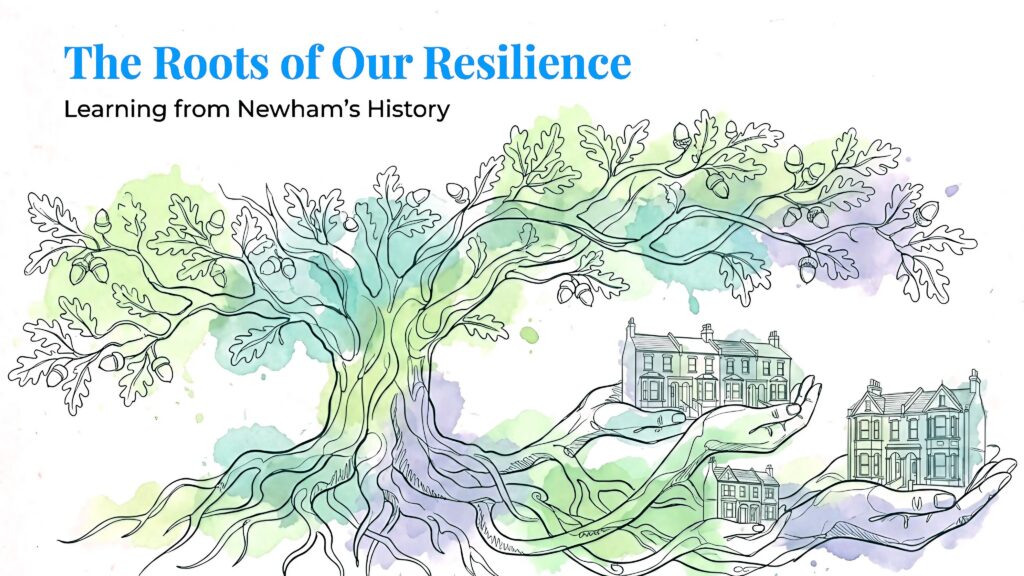
So many of the ideas that feel exciting and new — co-operative culture, environmental justice — are actually rooted in local stories going back generations. That’s a knowledge base we should reclaim and expand.
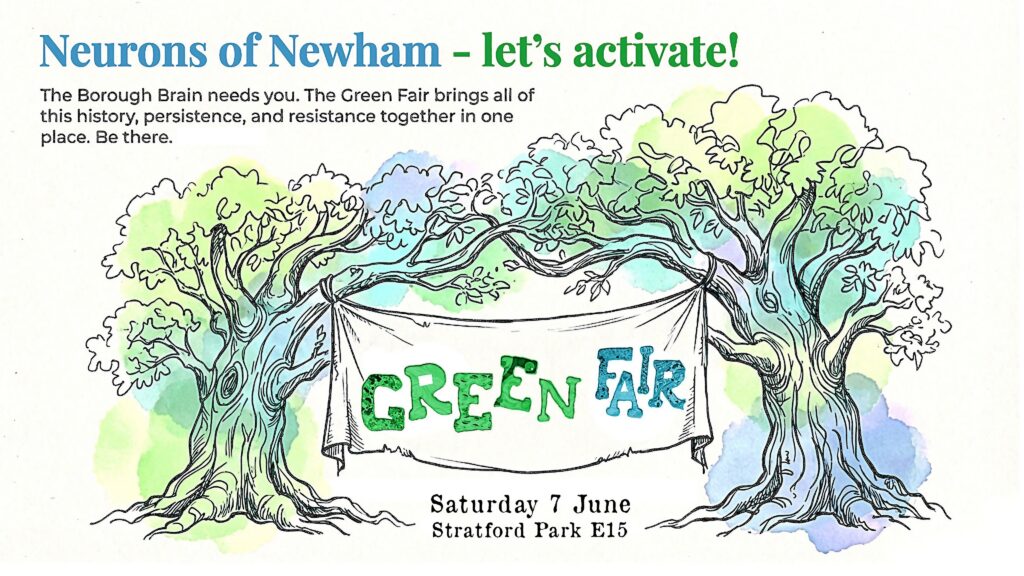
If sustainability means anything, it’s not just saving a bit of carbon or using less plastic. It’s about sustaining the local community, the most vital and human parts of it, the things that make you proud to live in this place. Where I’m based in Forest Gate, we’ve got the amazing Clapton Community Football Club. They do everything — sport, social inclusion, community organising. We also have Newham Woodcraft Folk, the cooperative youth movement, and festivals like the upcoming Green Fair where it all comes together.
All this technology is kinda fun, but I still say: beware of distractions. We don’t want to be sitting talking to bots while our planet burns. Our history, purpose and humanity is really what it’s about.
Peace out.